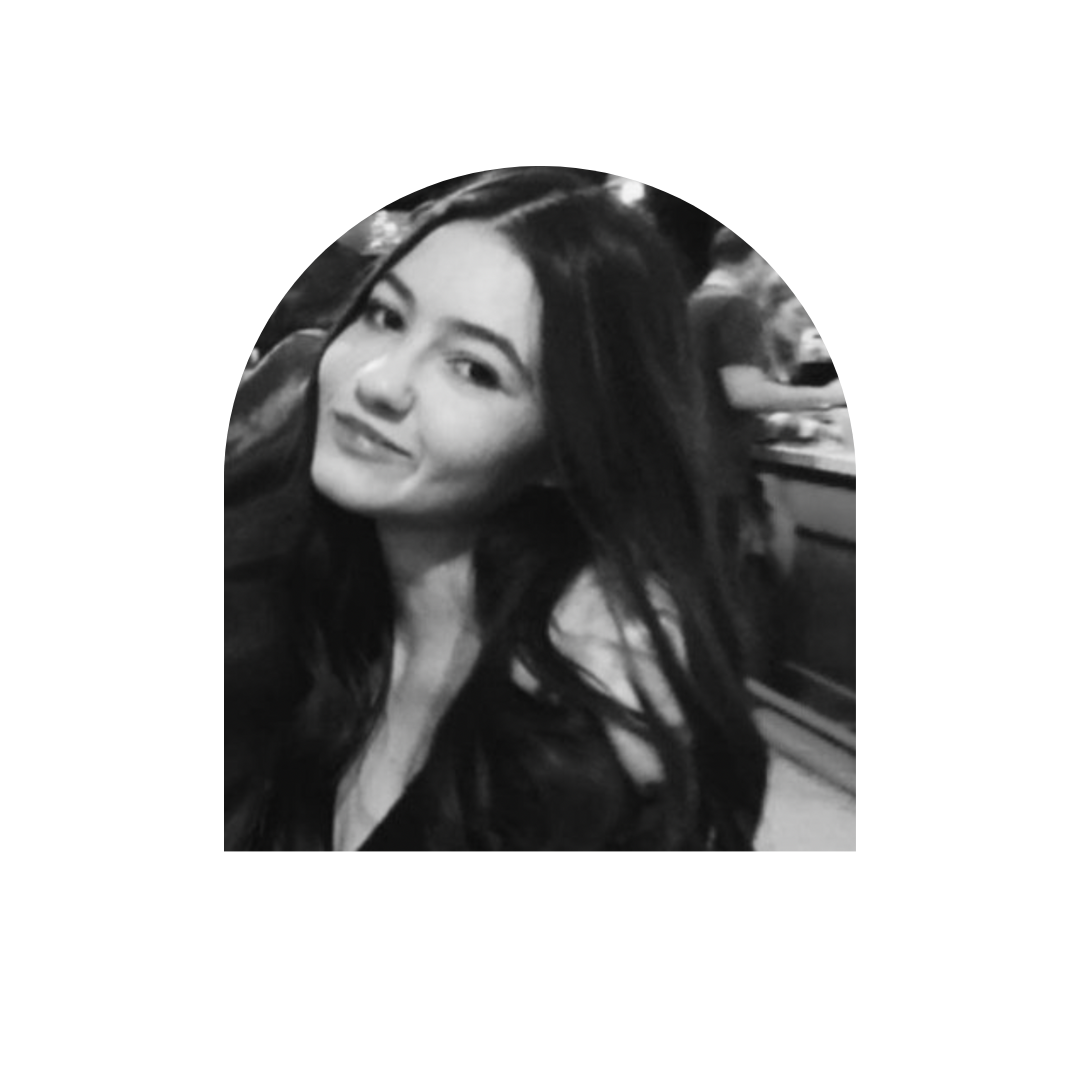
Interviewed by Kirry Kaufer POETRY editor at Chaotic Merge
Kirry Kaufer: “Myofascial Trigger Point” is very in tune with time. “I wake up past four p.m.,” and ”a gesture to my ___ beats per minute” stand out in particular. How would you say time relates to your writing?
Court Ludwick: I am constantly frustrated with time. And I suppose that frustration comes out in my writing. Time, or at least the arrow of time, and the way we use time, feels so steady, so irreversible—which you might think brings comfort—but I find that it brings me the opposite. How can anything be so steady? Is the universe not scared, moving forward like that? I love your question. It pulls me in so many directions.
I suppose my problem is that I don’t know what to do with time. When we’re talking about hyperobjects, time is technically one part of the equation, but it also feels like the biggest hyperobject to me. It’s on a scale I don’t have access to. It is the scale I don’t have access to. “Myofascial Trigger Point” is very much in conversation with questions surrounding time, as well as the anxiety accompanying questions not so easily resolved.
Okay. So stars burn out. The nuclear fuel they have is limited. And I’m scared I’m more like a star than not. But I also think about how moments that seem to have passed haven’t, not really. Is memory our attempt to reverse the directional quality of time? I don’t know. Linearity swallows me up when I would rather fall into a black hole’s liquid belly. (Moving on!)
Kirry Kaufer: The anatomical references you use are very intriguing—“there’s a crick in my neck,” “skin and bone, skin and sinew, skin and self,” and “a stiffness unwound by knuckles” are a few in particular that stand out. Is there a particular writing exercise you use to produce such sensory language?
Court Ludwick: Yeah, there’s a kind of friction here that I was going for. My work is concerned with the body so often, too. I wish I had a better answer, but I think I’m just hyperaware of my own body. How it exists in the world. How my imagining of myself is inevitably different from others’ perceptions of me. And there’s such a strangeness in those gaps. Also in realizing difference like that is a thing that not only exists but is a given, and will always be. These are questions my forthcoming book asks, maybe answers, probably just complicates.
I’m not sure I have any exercises, exactly, but art is something I turn to when language isn’t coming as easy. I’m loving H.G. Schiavon’s abstract bodies, that work, right now. And Amanda Wall is a forever favorite. Her work distorts in the best ways. Other writers, too, as often as I can. I’m rereading Atul Gawande’s Complications for a class I’m teaching—a book very much in dialogue with the body, the handling of bodies.
There are a few prompts I give my students, ones I’ve also used, that I like. Bhanu Kapil’s “Twelve Questions” is a great one. Imposing certain constraints on yourself is another. It can be interesting to see how different people navigate the same limitations. Say you can’t use a word, or an image, that you typically gravitate toward. Say you can’t use tactile imagery and, instead, have to rely on the other senses. Things like that. All a prompt is, is a limit. I find that the best prompts are aware of this.
Lately, I’ve been leaning into visual stuff. So yeah, the art. Pulling up a painting, a sculpture, an exhibit, and letting students create from that visual place is a fun time. Last semester, my students absolutely fell in love with Yayoi Kusama’s “You Who Are Getting Obliterated in the Dancing Swarm of Fireflies.” Being hands on, too, helps me. Crop rotating, I saw that somewhere recently. Like when you paint one night instead of writing another poem. Collage is something I’m starting to do more. I destroyed an old anatomy textbook the other day.
Kirry Kaufer: What type of feeling would you like readers to leave with after reading this poem? Are there questions you would like this poem to raise? How does the intended effect of “Myofascial Trigger Point” differ from your other works?
Court Ludwick: I don’t think there’s any one feeling I’d like readers to have after reading this poem, my work. I’m happy if readers feel anything at all. We don’t feel enough these days. And we really should. But I think people ignore things. Too often.
I suppose I want readers uncomfortable. I want everyone more unsettled. There’s a genocide happening right now in Palestine, but who is confronting their complicity in that? In the violence we all are part of? Why shouldn’t we sit with that? If we have a moment of pain, or even the slightest discomfort in the body, why are we so quick to rid ourselves of the pain without figuring out the underlying cause? Foot asleep? Shake it away. Child death? Agree to round up your drive thru total for that one charity and then you’re good. Free to go buy another Stanley cup or whatever because you deserve it, you’re a Good Person. I want this poem, and all my work really, to make readers feel something besides that numb. What happens if we sit with those feelings that are widely considered “negative”? What happens if we lean into that, rather than run away?
I really like the last part of this question, how “Myofascial Trigger Point” differs from my other works. I’m not sure that my intent is any different, but I’d say this poem differs in other ways. It’s concerned with similar things, for sure—the body, states of anxiety, that feeling of discomfort and existing in-between the moment when you notice your discomfort and the moment when you try to make that feeling go away, feeling a certain apart-ness from oneself, from others, from certain constructs that seem illogical—but I think this work is more reflective? More aware? Honestly, for me, some of my other work feels less controlled. Not in a bad way either. But more chaotic, as opposed to “Myofascial.” There’s a restraint here that I quite like. And I think that restraint make this piece sit at some kind of halfway point, a point after the pain but before the fix, the sigh of relief. Is it something closer to a held breath?
Kirry Kaufer: How would you describe your feeling upon receiving a Pushcart Prize nomination? Did you expect this poem to be nominated?
Court Ludwick: Ecstatic. Truly. But, as far as expectations go, I try to limit those. Still, it’s impossible to never expect anything, right? Even so, no, I did not expect this piece to be nominated. When I write, and later submit my work, things like this aren’t in my mind. I write for the same reason why any writer does, we have a compulsion to, we can’t not write. And I submit my work because, well, why do we ever open our mouths to speak? Because we want to be heard? Because we want someone else to listen? And then, why do we listen?
It is such a lovely thing, though, to realize people are reading my poetry. Writing can be such an isolating act, so it’s great when people connect with your words. I think that’s something everyone wants, yeah? Even if you aren’t a “writer,” whatever that means, we all want someone to listen when we have something to say. Writing is how I attempt to understand my own thoughts. Having someone connect with my writing, listen and engage, that’s someone attempting to understand part of me too. Usually, it’s someone attempting to understand a part of me that I don’t even understand. That’s so fucking lovely. That’s one of the reasons why I fell for poetry in the first place.
I’ll say it like this: writing a poem is like taking a blade and slicing off a tiny part of yourself and then chucking it over your shoulder and hoping someone reaches out and catches it and holds it for a while, takes care of this tiny fragment of you that is confused and scared and screaming for someone to get it. As a reader, you hold fragments of other people for a little while, too.
Who is Court Ludwick?

Court Ludwick is a writer, artist, and educator currently pursuing her PhD in Literature and Creative Writing. She is the author of These Strange Bodies (ELJ Editions, 2024) and the founding editor-in-chief of Broken Antler Magazine. Her work has appeared or is forthcoming in Denver Quarterly, Poetry South, West Trade Review, Oxford Magazine, Full House Literary, Archetype, and elsewhere. Find her on socials @courtludwick. Find more of her work at www.courtlud.com.
Leave a Reply